MassachusettsHISTORY EXPLORERS GRADES 3–8
Language / Idioma
Choose your path

Reading tools & my notebook
My passport
Quick glossary
evidence
Information from a source that helps us test a claim.
source
A document, object, image, or account we can examine.
inference
An explanation based on clues; it still needs checking.
migration
Moving from one place to another to live.
immigrant
A person who moves to another country to live.
estimate
An approximate amount, based on available information.
oral history
A recorded interview about someone’s memories and experiences.
community
People connected by a place, relationships, or shared activities.
ancestry
Family origins across generations.
primary source
Evidence created by someone who experienced a time or event.

Put big ideas in time order

Move the cards from earliest to latest. Which two milestones happened closest together?

  1. 1926 Goddard’s liquid-fueled rocket launch
  2. 1876 Bell’s successful telephone call
  3. 1969 Apollo 11 lands on the Moon; Hamilton’s software team contributed
  4. 1903 Marconi’s transatlantic message from Wellfleet

Move a card to begin.

Explain your thinking: What clue helped you? Where could you check your answer?

Massachusetts ideas traveled far.

Investigate inventions, meet their makers, and look for the teams behind familiar discoveries.

From Auburn to space

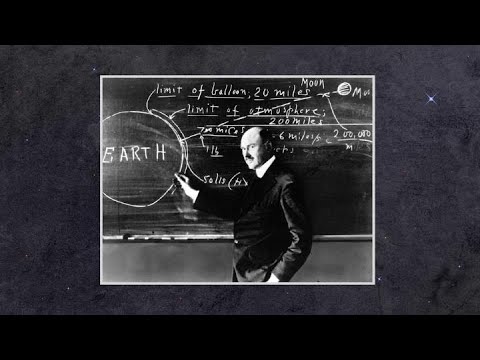
Preview of Robert Goddard and the beginnings of modern rocketry
NASA Goddard · Short science-history film

Robert Goddard and the beginnings of modern rocketry

Connect a rocket experiment in Auburn, Massachusetts, to the history of spaceflight. Look for testing, changes, and teamwork. Rocket experiments use hazardous equipment; our classroom challenge is to draw and explain an idea, not build or ignite a rocket.

Open video with its publisher ↗ · Source & teaching context ↗

Watch, pause, and discuss
  1. What question was Goddard trying to solve?
  2. What evidence shows that inventions take repeated work?
  3. How can a small experiment influence a much larger project?
01

Listen across a room

Bell and Watson’s Boston experiment connected spoken words with an electrical device.

Alexander Graham Bell →Thomas A. Watson →
02

Send words over the ocean

Marconi’s South Wellfleet station used wireless signals across the Atlantic.

Guglielmo Marconi →
03

Give a spacecraft instructions

Hamilton’s MIT team wrote software that helped guide Apollo missions.

Margaret Hamilton →

Raytheon: radios, radar, and a kitchen surprise

Vannevar Bush helped found the Massachusetts company later known as Raytheon. Percy Spencer and other engineers developed microwave cooking from work connected to radar. A company is an organization; its inventions are made by people and teams.

Science, inventions & engineeringPortrait of Robert H. Goddard.

1882–1945

Robert H. Goddard

Worcester and Auburn

Goddard worked on rockets and tested ideas that helped make spaceflight possible. In 1926 he launched the first successful liquid-fueled rocket in Auburn. It was a small beginning with a large future. Inventors learn from tests, records, changes, and attempts that do not work.

Investigate this life
Science, inventions & engineeringPortrait of Alexander Graham Bell.

1847–1922

Alexander Graham Bell

Boston

In Boston on March 10, 1876, Bell spoke words that his assistant Thomas Watson heard through their experimental telephone. Their work helped people communicate across distances. Bell worked within a wider history of inventors exploring sound and electricity; inventions rarely come from one person working entirely alone.

Investigate this life
Science, inventions & engineeringPortrait of Thomas A. Watson.

1854–1934

Thomas A. Watson

Salem and Boston

Watson was a skilled mechanic who worked with Alexander Graham Bell. He helped build and test telephone equipment and heard Bell’s words during their famous 1876 experiment in Boston. His role reminds us to look for the partners, makers, and teams behind a famous invention.

Investigate this life
Science, inventions & engineeringPortrait of Guglielmo Marconi.

1874–1937

Guglielmo Marconi

South Wellfleet, near Marconi Beach

Marconi was an Italian inventor who developed wireless communication. In 1903 his South Wellfleet station sent a message from President Theodore Roosevelt across the Atlantic. The nearby beach preserves his name. This was a Cape Cod milestone, not Marconi’s first experiment with wireless signals.

Investigate this life
Science, inventions & engineeringA Raytheon Radarange microwave oven aboard the ship NS Savannah, installed around 1961. Spencer’s work helped make microwave cooking possible.

Context image · A Raytheon Radarange microwave oven aboard the ship NS Savannah, installed around 1961. Spencer’s work helped make microwave cooking possible.

1894–1970

Percy Spencer

Raytheon in Massachusetts

While working on radar equipment, Spencer noticed that microwaves could heat food. He and other Raytheon engineers developed microwave cooking equipment. Their work links a Massachusetts company to a familiar kitchen appliance. Studying an unexpected result can lead to a new question and a new invention.

Investigate this life
Science, inventions & engineeringPortrait of Vannevar Bush.

1890–1974

Vannevar Bush

MIT in Cambridge; Raytheon co-founder

Bush was an engineer who worked on early computing at MIT and helped found the company later known as Raytheon. Its early work included radio technology. His career connects laboratories, companies, and government research. Large technical changes depend on many people with different kinds of skill.

Investigate this life
Science, inventions & engineeringPortrait of Lewis Howard Latimer.

1848–1928

Lewis Howard Latimer

Chelsea and Boston

Latimer was a Black inventor and skilled draftsman born in Chelsea. A draftsman makes careful technical drawings. He worked with important electrical inventions and developed improvements related to light bulbs. His life shows how drawing, reading, and practical knowledge can become tools for invention.

Investigate this life
Science, inventions & engineeringPortrait of Jan Ernst Matzeliger.

1852–1889

Jan Ernst Matzeliger

Lynn

Matzeliger moved from Suriname to the United States and worked in Lynn’s shoe industry. He invented a machine that joined the upper part of a shoe to its sole. The machine helped speed production. His story connects immigration, skilled work, invention, and the everyday things people wear.

Investigate this life
Science, inventions & engineeringMargaret E. Knight pictured at work in a 1912 newspaper article.

1838–1914

Margaret E. Knight

Springfield

Knight designed a machine to cut, fold, and glue paper into flat-bottomed bags. She worked in Springfield and defended her right to the invention. A patent is a legal protection for an invention. Her work changed a common object that people could use every day.

Investigate this life
Science, inventions & engineeringPortrait of Maria Mitchell.

1818–1889

Maria Mitchell

Nantucket

Mitchell studied the sky from Nantucket and discovered a comet in 1847. She became an astronomer and teacher who encouraged women to study science. Her observations connected an island rooftop to international scientific work. Keeping careful records helped make her discovery useful to others.

Investigate this life
Science, inventions & engineeringPortrait of Margaret Hamilton.

Born 1936

Margaret Hamilton

MIT in Cambridge

Hamilton led the team that developed important flight software for NASA’s Apollo program at MIT. Software is a set of instructions for a computer. Her team planned for problems that could happen during a mission. Massachusetts work helped astronauts travel to the Moon.

Investigate this life
Science, inventions & engineeringPortrait of An Wang.

1920–1990

An Wang

Harvard in Cambridge; Wang Laboratories

Born in Shanghai, Wang came to the United States and studied at Harvard. He developed important computer memory technology and founded Wang Laboratories. His career connects Massachusetts to immigration and the growth of modern computing. Computer memory helps a machine keep information it needs.

Investigate this life
Science, inventions & engineeringPortrait of Ellen Swallow Richards.

1842–1911

Ellen Swallow Richards

MIT and the Boston area

Richards was MIT’s first woman graduate and became a chemist and teacher. She studied water quality and ways science could improve daily life. Her work helped connect laboratory research to public well-being. A question about the water people drink can become an important scientific investigation.

Investigate this life
Science, inventions & engineeringPortrait of Mária Telkes.

1900–1995

Mária Telkes

Dover Sun House

Telkes developed a solar heating system for an experimental house in Dover. Architect Eleanor Raymond designed the house, which was completed in 1948. Their work explored how sunlight could help warm a home. Solving an energy problem can bring scientists, architects, and builders together.

Investigate this life
Science, inventions & engineeringPortrait of Christa McAuliffe

1948–1986

Christa McAuliffe

Framingham

Christa McAuliffe grew up in Framingham and graduated from Framingham State College before becoming a teacher. She wanted students to see history as the lives of ordinary people, including their own families. NASA selected her for its Teacher in Space Project in 1985. She trained to share lessons from the space shuttle with classrooms on Earth. McAuliffe and six crewmates died when Challenger broke apart shortly after launch in 1986. Her educational legacy continues through programs that connect science, exploration, and teaching. Her story also belongs to the history of responsibility and safety in exploration.

Investigate this life
Science, inventions & engineeringOfficial NASA Portrait of Stephanie Wilson

born 1966

Stephanie Wilson

Boston; Pittsfield; Cambridge

Stephanie Wilson was born in Boston, grew up in Pittsfield, and studied engineering at Harvard University. Her interest in space led to work on spacecraft systems and then selection as a NASA astronaut in 1996. She flew on three space shuttle missions that helped build and supply the International Space Station. Her tasks included using robotic arms and supporting complex work by a large team. Wilson's career connects classroom mathematics and engineering with international cooperation in space. It shows why a successful mission needs careful preparation, communication, and many kinds of expertise.

Investigate this life
Science, inventions & engineeringPortrait of Benjamin Franklin

1706–1790

Benjamin Franklin

Boston

Benjamin Franklin was born in Boston and learned the printing trade as an apprentice to his brother James. As a teenager, he left Massachusetts and built a career in Philadelphia. He became a printer, writer, experimenter, inventor, and diplomat. His investigations of electricity made him known internationally, while his public projects included a lending library and improvements to civic life. During the American Revolution he helped secure French support for the United States. Franklin's many roles show how reading, practical skills, and sharing ideas can connect science, communication, and public service.

Investigate this life
Science, inventions & engineeringPortrait of Rachel Carson

1907–1964

Rachel Carson

Woods Hole

Rachel Carson first came to Woods Hole in 1929 to study at the Marine Biological Laboratory. Close observation of shore animals and ocean life strengthened her interest in biology and helped shape her writing. She later returned to the area while researching the sea. Carson became known for books that explained science clearly to a wide audience. Silent Spring, published in 1962, examined the harm that some pesticides could cause to living things. Her career connected patient scientific study with public questions about how human decisions affect the natural world.

Investigate this life

Invent on paper

Choose a classroom problem. Draw an invention that might help. Label three parts, explain who it serves, and ask a partner what you should improve. No tools, heat, electricity, or construction are needed.

Take a virtual field trip

All field trips →
Browse all collections